Food Resiliency Systems
Cultiva
Project Moon Hut Foundation
A U.S. 501(c)(3) Public Charity
Civilization can't thrive if its food and chemistry are fragile

Cultiva is building the architecture that allows biological production to operate reliably in environments where surface systems become too volatile, too exposed, or too energy-intensive to sustain long-term resilience.
By treating food production as infrastructure rather than seasonal activity, Cultiva changes the equation. It improves reliability, reshapes energy and thermal economics, and makes biological production possible in environments where conventional surface systems become inconsistent or unforgiving.
Food today depends on fragile supply chains, shallow soils, and increasingly volatile climates. When these systems fail, communities feel the impact immediately.
Cultiva approaches food differently.
Instead of treating agriculture as seasonal activity tied to surface conditions, Cultiva treats food production as critical infrastructure—something engineered for reliability, repeatability, and resilience.
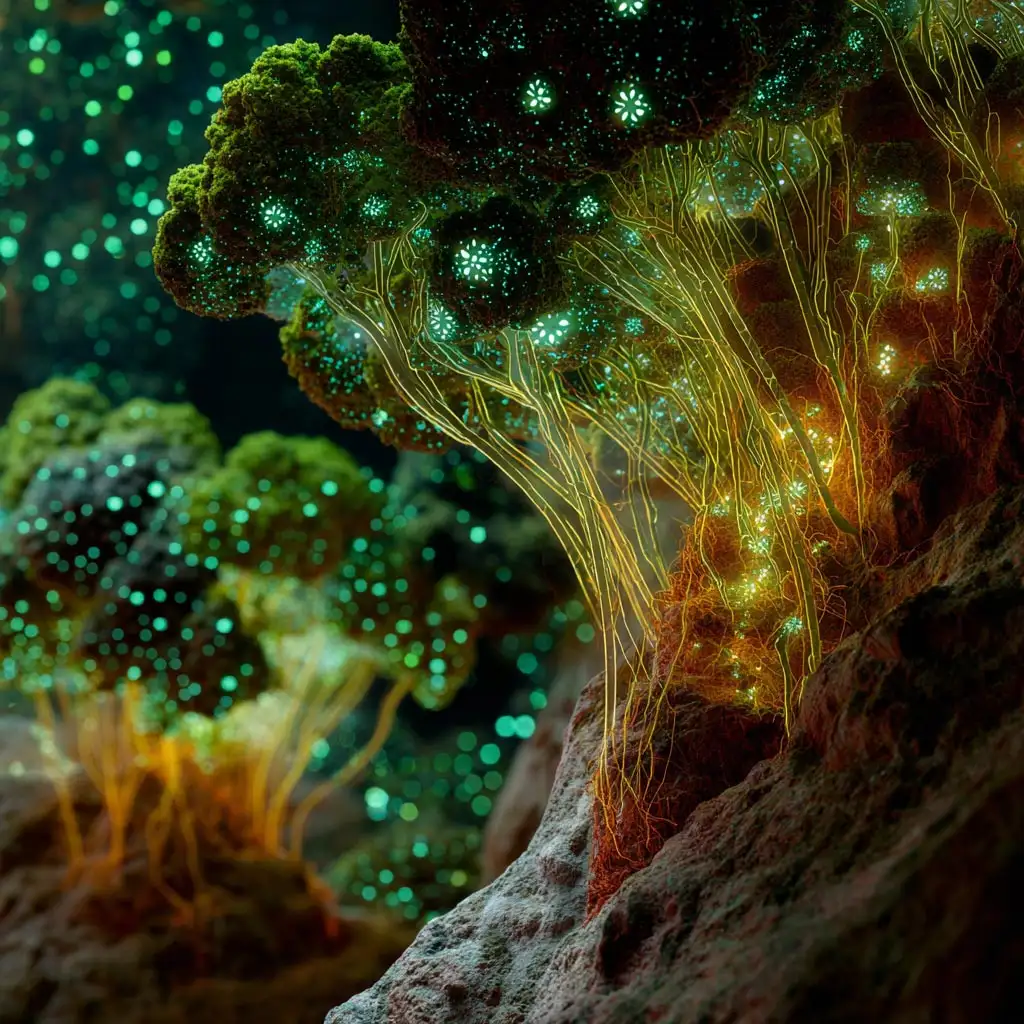
Within the Project Moon Hut ecosystem, Cultiva focuses on building systems that allow food to be produced in controlled environments beneath the surface, where conditions can be stabilized and optimized. Abandoned mines, tunnels, and purpose-built subterranean facilities become living systems capable of supporting resilient food production.
The goal is simple but powerful: ensure that food systems can endure disruption and remain stable regardless of geography, climate shifts, or supply chain breakdowns.
What we are building
Cultiva is developing Cultiva OS—the operating framework for resilient agriculture systems.
Chemistry → Substrate → Infrastructure → Food Systems
Rather than relying on natural soil conditions or seasonal variability, Cultiva systems combine controlled infrastructure, engineered substrates, and precision nutrient sequencing to create environments where crops can grow consistently.
These environments are modular and repeatable.
A system developed in one location can be adapted to another, whether the site is an abandoned mine, a transit tunnel, or a purpose-built chamber designed for underground food production.
Cultiva is not a greenhouse and it is not simply vertical farming.
It is agriculture designed as infrastructure—engineered systems that secure food production the same way societies secure electricity, water, and communications.
By building food systems that can operate anywhere and under controlled conditions, Cultiva strengthens communities, stabilizes supply chains, and creates long-term resilience in the face of global disruption.
Strategic Framework
Cultiva operates through a layered design that integrates chemistry, biology, and infrastructure into a unified system.
At the foundation is resilient chemistry—nutrient and water systems engineered for precision and repeatability. Nutrients are sequenced rather than mixed randomly, ensuring that essential elements reinforce rather than interfere with one another.
Above that layer are adaptive substrates designed for underground environments. These substrates function as active biological systems, storing, exchanging, and delivering the resources plants need in confined ecological conditions.
The final layer is infrastructure integration—the transformation of underground spaces into controlled ecological environments. These environments stabilize humidity, temperature, lighting, water cycles, and atmospheric composition so crops can grow consistently regardless of external conditions.
Together, these layers move agriculture beyond fragile cycles and toward infrastructure-grade reliability.
The result is a system capable of operating across locations, climates, and geological conditions while maintaining predictable production.
Progress Report
Cultiva is currently advancing the foundational architecture of this system.
Key progress includes:
- Development of the Cultiva OS framework
- White papers outlining the science and infrastructure logic behind underground agriculture
- Integration of nutrient chemistry, substrates, and controlled environments into a unified design model
- Early planning for research partnerships and pilot environments
These steps establish the scientific and operational groundwork required to move from concept to real-world deployment.
Who We Are Looking For
Building Cultiva requires more than agricultural expertise. It requires people who think in systems.
We are seeking collaborators across disciplines including:
- Agronomists, plant physiologists, and biologists
- Controlled-environment agriculture specialists
- Hydroponics and aeroponics engineers
- Substrate and nutrient chemistry designers
- Power, lighting, and environmental control engineers
- Robotics and automation engineers
- Infrastructure architects for underground environments
- Project managers and logistics leaders
We also need experienced builders—COOs, CTOs, CFOs, and operational leaders who can coordinate complex systems and bring them to life.
If you believe food systems should be designed for resilience rather than convenience, Cultiva is a place to build.
What Type of Builder Are You ?
Cultiva is not just about producing crops.
It is about building systems that ensure food continuity for generations.
If you design for stability, resilience, and long-term infrastructure—this is your invitation.
Each initiative within Project Moon Hut begins with a short overview like this one. Behind every program is a deeper set of plans, research, and development pathways.
For those interested in helping shape the system, we welcome the conversation.
Like all Project Moon Hut initiatives, Cultiva develops systems on Earth that can ultimately support both Earth and Moon environments.
Each write-up here is just a starting point. Behind every initiative is a detailed pitch deck that outlines the vision, structure, and next steps. Because these decks contain sensitive material, access is provided by request.